
Panel Building: The Unsung Foundation of Industrial Automation
In short, a panel builder (also commonly referred to as a panel technician) is a skilled tradesperson who specializes in the assembly, wiring, and testing of electrical control panels. These panels serve as the nerve centers for automated machinery, manufacturing processes, water treatment plants, oil and gas operations, HVAC systems, and countless other industrial applications.
For many people entering the automation field, panel building is an excellent starting point. Whether you’re a recent trade school or community college graduate, a career changer with limited electrical knowledge, or even a military veteran transitioning into civilian work — a panel shop is where foundational hands-on experience is put into real practice.
A panel technician handles a wide variety of tasks, including:
- Building and wiring electrical control systems
- Component installation (PLCs, relays, VFDs, breakers, HMIs, etc.)
- Following strict safety standards and electrical codes
- Reading and interpreting blueprints, schematics, and panel layout drawings
- Using hand tools and power tools with precision
- Performing functional testing before panels leave the shop
The work is a unique mix of electrical expertise and mechanical assembly. While some aspects can feel repetitive — cutting wire, laying out DIN rail, routing cables neatly through wire duct — this repetition is exactly what builds muscle memory and deep technical intuition. Clean, professional workmanship in a panel shop is highly valued because it directly impacts how reliable and maintainable the final system will be in the field.
A Typical Day in the Panel Shop
Most days start with reviewing engineering drawings and a bill of materials. You’ll mount components on backplates, install terminal blocks, run power and control wiring, label everything clearly, and perform continuity and functionality tests. Larger panels might require custom fabrication, while smaller ones demand extreme attention to space and organization.
The environment is hands-on: standing for long periods, working inside metal enclosures, and occasionally dealing with last-minute design changes. It’s physical work, but it rewards those who take pride in craftsmanship.
Why Panel Building is Such a Strong Foundation
Working as a panel builder gives you something many classroom-trained technicians lack — real-world familiarity with how industrial control systems are actually built. You develop practical knowledge of:
- Proper wire sizing and color coding
- Grounding and shielding techniques
- Component spacing and heat management
- Neat cable management and labeling standards
This hands-on foundation makes you far more effective when you eventually move into troubleshooting, commissioning, or design roles.
Next Career Steps: Growing Beyond the Panel Shop
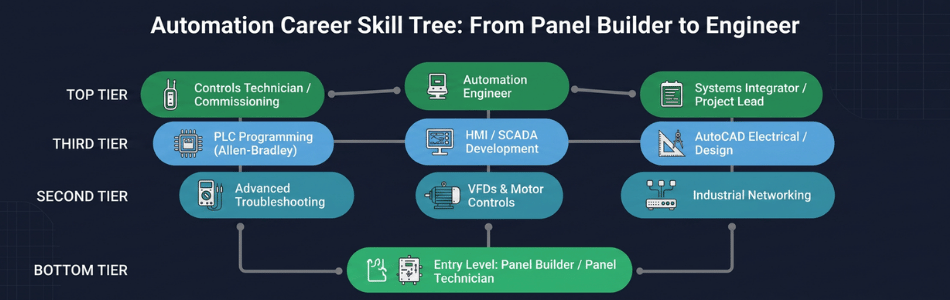
The experience and credibility you gain as a panel technician open many doors within the broader automation industry. With the basics mastered, skilled panel builders commonly move into roles such as:
- Controls Technician / Automation Technician – Installing panels on-site, performing loop checks, and troubleshooting live systems.
- PLC Programmer – Writing and modifying logic for Allen-Bradley, Siemens, and other platforms.
- Field Service / Commissioning Engineer – Traveling to customer sites for system startup and support.
- Controls Designer / Drafting – Creating schematics using AutoCAD Electrical or EPLAN.
- Automation Engineer / Systems Integrator – Designing complete control systems from concept to completion.
- Maintenance Electrician or Reliability roles in manufacturing and energy facilities.
While the panel shop doesn’t directly teach programming or advanced system design, it gives you the electrical and mechanical foundation needed to learn those skills quickly. Many successful automation professionals started their careers wiring panels.
Key Skills to Develop for Career Growth
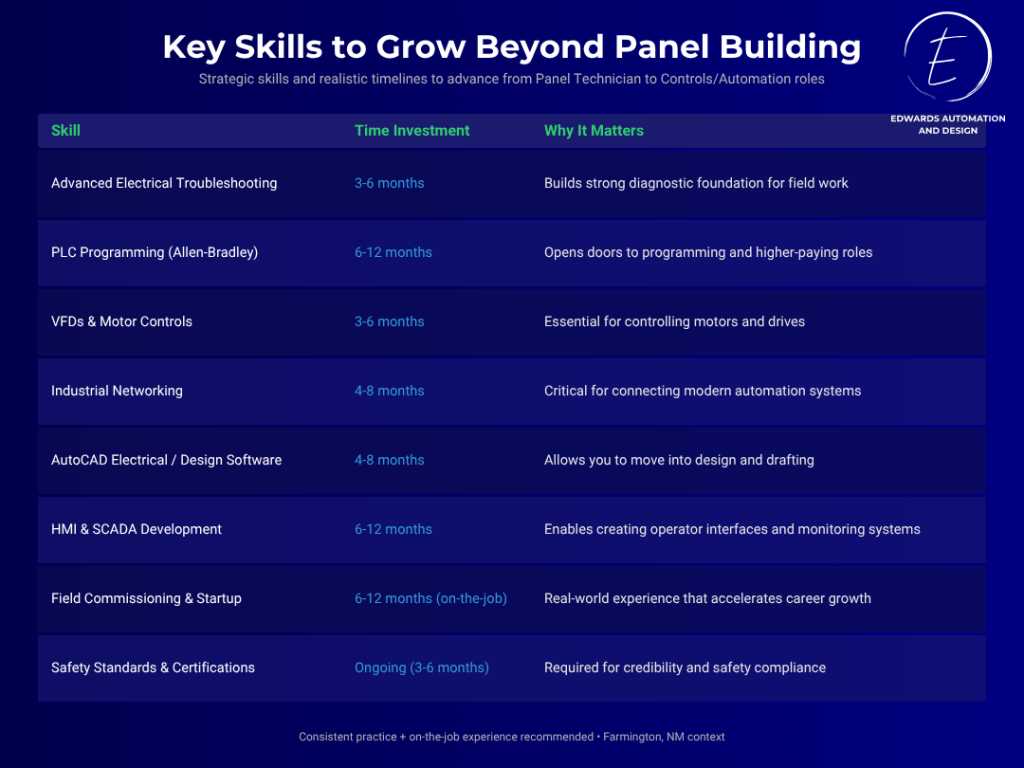
To move out of the shop faster, focus on these high-value skills:
Technical Skills:
- Advanced electrical troubleshooting using multimeters and diagnostic tools
- PLC programming (especially Allen-Bradley/Rockwell)
- Variable Frequency Drive (VFD) setup and tuning
- Industrial networking (Ethernet/IP, Modbus, etc.)
- HMI and SCADA interface development
Design & Documentation:
- AutoCAD Electrical or EPLAN
- Creating and modifying schematics
- Strong documentation habits
Field Skills:
- On-site commissioning and startup
- Safety systems and NFPA 79 compliance
Certifications Worth Pursuing:
- UL 508A
- NFPA 70E (Electrical Safety)
- Rockwell Automation training
- IPC wiring standards
The Future of Panel Building
As Industry 4.0 advances, panel building is evolving. Smart components, modular designs, and digital twins are becoming more common. Panel technicians who understand both traditional craftsmanship and new technologies will be in high demand.
In regions like Farmington, New Mexico, where oil & gas automation remains strong, experienced panel builders and controls technicians continue to find excellent opportunities.
Final Thoughts
Panel building may not always be glamorous, but it is foundational. It builds the practical skills, work ethic, and technical intuition that separate good automation professionals from great ones. If you’re willing to put in the work and keep learning, a panel shop can be the perfect launchpad for a rewarding, well-paying career in industrial automation.
Whether you stay in panel building long-term or use it as a stepping stone, the experience will serve you well for years to come.